
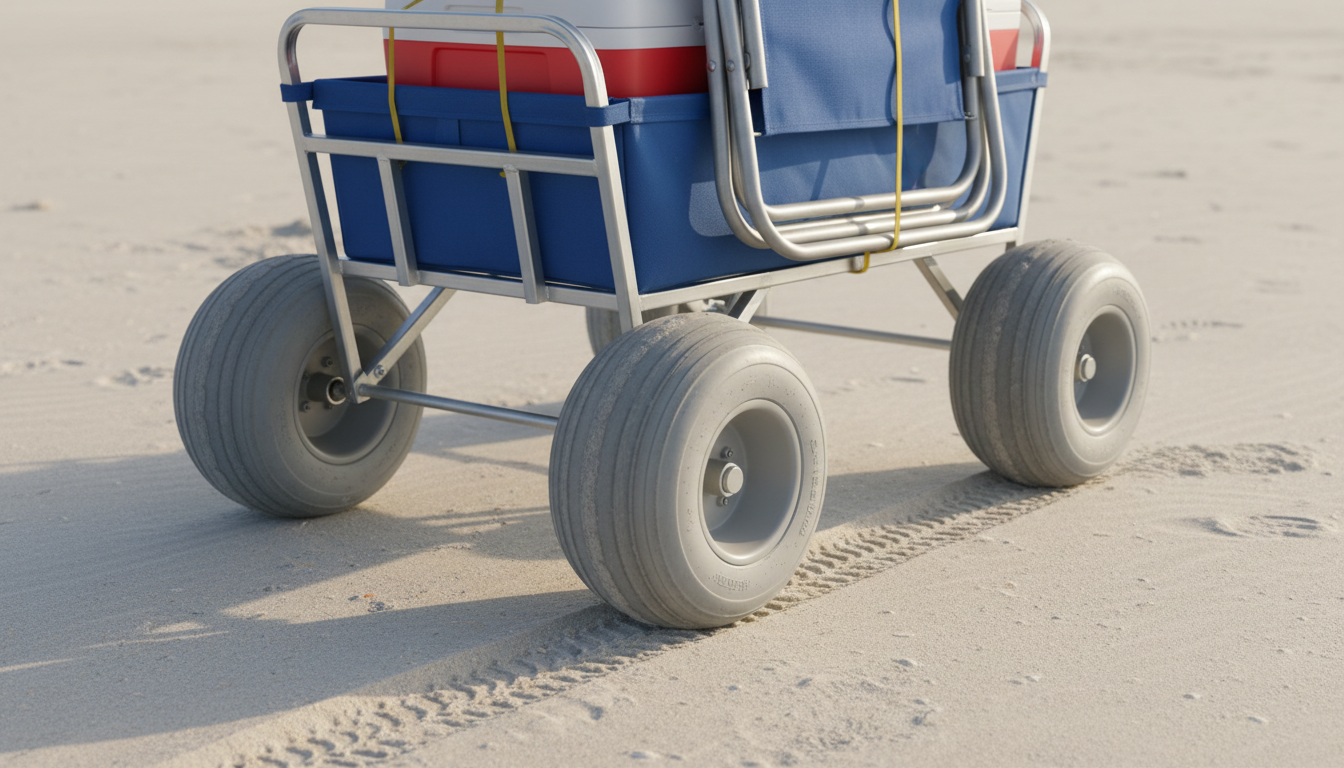
A beach wagon can carry 150 pounds on a warehouse floor and still be miserable on the beach. That is the problem with shopping by capacity numbers alone. Soft sand changes everything. Small wheels dig in, overloaded carts become anchors, narrow tires create resistance, and a wagon that looked convenient online can turn the walk from the parking area into the hardest part of the day.
If you are shopping for Galveston, Surfside, Port Aransas, South Padre or another Gulf Coast beach, start with the surface you actually cross. The best beach wagon is not necessarily the wagon with the biggest basket. It is the one you can still move after loading it.
The feature that matters most: the wheels
For soft sand, wheel width and flotation matter more than almost anything else. A narrow wheel concentrates the wagon’s weight into a smaller area and tends to sink. A wider tire spreads that load across more sand. That is why balloon-wheel beach carts can move dramatically better across loose sand than conventional utility wagons.
But there is a tradeoff. Oversized beach wheels add bulk, can make storage awkward and may be unnecessary if most of your route is pavement, boardwalk or packed sand. Buy for your normal trip, not the most extreme beach scenario you can imagine.
Folding wagon vs. dedicated beach cart
A folding utility wagon wins on convenience. It collapses quickly, fits into more vehicles and works for youth sports, festivals, parks and backyard jobs. For families who encounter mostly firm sand, it can be the better all-around purchase.
A dedicated beach cart gives up some versatility in exchange for sand performance. Large wheels, open frames and upright storage can make coolers, chairs, umbrellas and fishing gear easier to move. If your beach access regularly involves a long stretch of deep dry sand, that specialization starts to make sense.
Don’t be fooled by the maximum weight rating
A high load rating tells you what the frame may support; it does not tell you what you will enjoy pulling through sand. A cooler, canopy, chairs, towels, water, toys and a beach bag can add weight quickly. Every extra pound increases rolling resistance, especially once the wheels begin sinking.
We would rather have a well-balanced 100-pound real-world load on suitable wheels than a wagon advertised for 300 pounds sitting on tires designed for pavement.
Seven things we would check before buying
- Wheel width: wider generally performs better in loose sand.
- Ground clearance: a low frame can drag when the wheels sink.
- Steering: a wagon that turns poorly becomes exhausting when heavily loaded.
- Handle geometry: you should be able to pull without bending or clipping your heels.
- Corrosion resistance: Gulf salt and moisture are hard on exposed hardware.
- Folded dimensions: measure your cargo area before buying.
- Cleaning: sand will get everywhere, so removable fabric and accessible frame joints matter.
What about balloon wheels?
Balloon tires are popular for a reason: their large footprint helps the cart ride over soft sand rather than cutting deeply into it. For anglers, photographers, families carrying a large cooler or anyone crossing substantial dry sand, they can be worth the added cost and storage space.
They are not magic. Poor weight distribution can still make a cart difficult to control, and a huge cart can become inconvenient everywhere except the sand. Consider the entire trip from garage to vehicle to beach access, not only the final 200 yards.
The Texas Gulf Coast changes the buying equation
Beach access varies dramatically along the coast. Some trips involve paved access and a short walk. Others involve driving onto the beach or crossing loose duneside sand. That means there is no single “Texas beach wagon” that wins everywhere.
Before spending money, think about the two or three beaches you visit most often. How far do you actually pull your gear? Is the sand typically packed or loose? Can you drive close to where you set up? Are stairs involved? Those answers matter more than an online list of accessories.
What we would pack in the wagon
Put dense items low and near the axle or center of the wagon. Keep awkward lightweight gear such as chairs and umbrellas secured so it does not shift. Avoid stacking everything vertically just because the basket allows it. A lower, balanced load is easier to pull and less likely to tip when a wheel hits a rut.
Three buyers, three different answers
The occasional family beachgoer: prioritize folding size, versatility and reasonably wide all-terrain wheels. You probably do not need a giant dedicated cart.
The frequent Gulf Coast family: prioritize genuine sand performance, corrosion-resistant hardware and enough room for the cooler-and-chair load you actually carry.
The angler or heavy-gear user: look seriously at dedicated beach carts and balloon wheels. Moving bulky gear efficiently matters more than having the smallest folded package.
Our biggest beach-wagon buying mistake
Buying the largest wagon you can find sounds sensible until you have to lift it into an SUV, store it in a garage, clean it and drag it through loose sand. Bigger is useful only when the wheels and frame can manage the load and you genuinely need the capacity.
A five-minute wagon test before you buy
You can learn more from a brief hands-on test than from a long list of wheel diameters. First, load a cart with a realistic cooler-and-chair weight, not an empty showroom display. Pull it forward, turn it tightly and reverse direction. Watch whether the front wheels swivel cleanly or dig in. Look for a handle that leaves enough clearance from your feet; a tall adult and a shorter adult can have very different experiences with the same wagon. Finally, simulate picking the folded cart up into the vehicle. A model that is wonderful on sand but awkward at home may still be a poor family purchase.
A wheel that works well on firm wet sand can still bog down in the dry, loose sand above the tide line. A single path from the car to your spot may have both. If you spend much of your time crossing dry sand, ask the manufacturer for wheel dimensions and real use information before paying extra for a claimed ‘beach ready’ design. Do not assume ‘all-terrain’ means ‘soft-sand capable.’
Salt and sand maintenance determines whether it lasts
After a beach trip, remove loose sand before folding the cart, rinse the wheel hubs and other salt-exposed components with fresh water where the manufacturer permits, and let everything dry thoroughly before storage. Don’t force gritty bearings or joints. Check whether replacement wheels are sold separately; a wagon that allows you to replace a worn wheel can make more sense over several summers than one whose whole frame gets thrown out after a single failure.
Keep the practical distinction clear: tire flotation helps in loose sand, but sturdy axles, manageable loaded weight and easy cleaning make a beach cart worth owning. For your next outing, use Gulf Coast Beach Conditions to compare conditions before deciding which access point and how much equipment to pack.
The Thunderfoot verdict
If soft sand is the problem you are trying to solve, shop wheels first and capacity second. If convenience is the problem, prioritize folding size and versatility. And if you regularly carry serious loads across deep sand, a purpose-built beach cart can be worth paying more for.
Before loading the vehicle, check Thunderfoot Sports’ Gulf Coast Beach Conditions tool to help choose your beach and understand the day’s conditions. The right wagon makes the walk easier; choosing the right beach makes the entire day better.
Compare your options: Our original best beach wagons for soft Gulf Coast sand article covers the product shortlist. Before traveling, read how to check Gulf Coast beach conditions.