
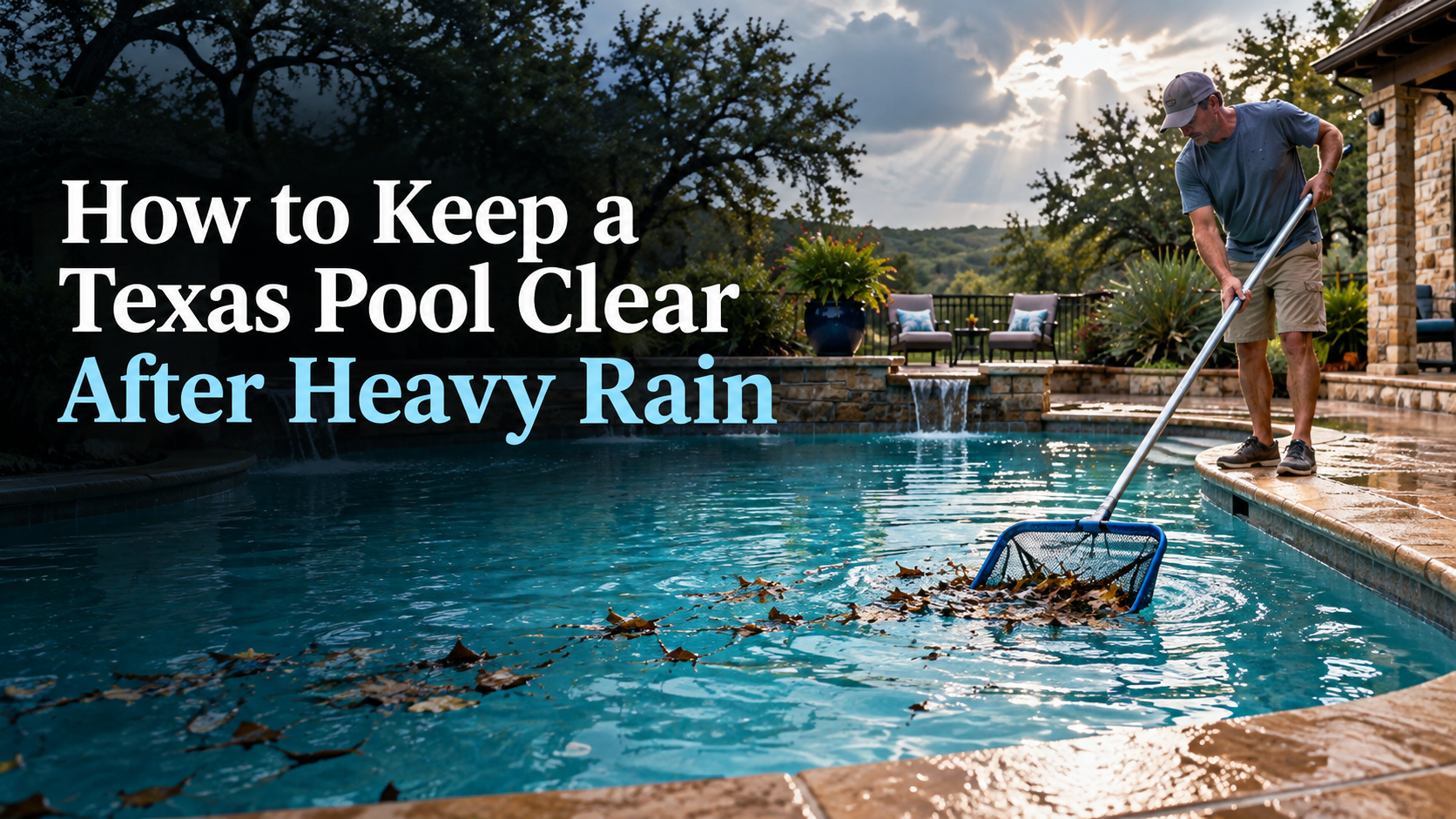
A Texas downpour can change a pool faster than most routine maintenance problems. Rain adds water, wind adds debris, runoff can add dirt and organic material, and the pool’s normal sanitizer demand can jump at the same time.
The fix is not to start pouring chemicals into cloudy water until something happens. Work in order: make the pool physically clean, restore circulation, test the water and then correct chemistry based on actual readings.
Safety First
Never mix pool chemicals with each other or add chemicals blindly. Follow the product label, use accurate test results and keep incompatible chemicals separated. Electrical or equipment damage after a storm should be handled before restarting affected equipment.

Step 1: Remove the Big Debris
Skim leaves, branches and other floating material before asking the filter to process it. Empty skimmer baskets and the pump basket if they collected storm debris.
If the bottom is covered in debris, remove as much as practical before aggressive chemical adjustment. Organic material consumes sanitizer and can make a chemistry problem look worse than it is.
Step 2: Check the Water Level
Heavy rain may push the water above its normal operating range. Follow the pool builder or equipment manufacturer’s guidance for lowering water if needed. Do not drain a pool simply because the water looks cloudy; excessive draining can create separate structural problems.
Step 3: Make Sure the System Can Circulate
Verify that the pump is primed, baskets are clear and the filter is operating normally. If the system lost power, was submerged or shows electrical damage, stop and have the equipment evaluated rather than repeatedly resetting breakers.
A dirty filter cannot clean storm water efficiently. Clean or backwash according to the filter manufacturer’s instructions and your normal pressure baseline.
Step 4: Test Before You Treat
At minimum, check sanitizer and pH with a reliable test method. The CDC recommends keeping pool pH in the 7.0–7.8 range. For pools using cyanuric acid, the CDC recommends at least 2 ppm chlorine; without cyanuric acid, its general home-pool guidance lists at least 1 ppm.
Your pool’s equipment, local conditions and product labels may call for a narrower operating target. Use those instructions rather than treating a broad public-health minimum as the perfect target for every backyard pool.
Step 5: Correct pH Deliberately
Rain can move pH and alkalinity, but the direction and size of the change depend on the water and what entered the pool. Test first. Adjust with the exact product label and pool volume.
Do not guess at gallons or pounds of chemical from an internet article. Chemical strength varies by product, and a 10,000-gallon pool is not a 25,000-gallon pool.
Step 6: Restore Sanitizer
Storm debris and contamination increase chlorine demand. Add sanitizer according to the test result, pool volume and product directions. If the pool requires a high-chlorine cleanup process, follow the chemical manufacturer’s instructions and keep swimmers out until the water returns to a safe operating range.
Step 7: Brush, Circulate and Recheck
- Brush walls, steps and problem areas.
- Run circulation long enough to move treated water throughout the pool.
- Recheck filter pressure and clean again if the storm load was heavy.
- Retest chemistry after circulation rather than immediately stacking additional products.
- Do not swim until the water is clear enough to see the bottom and chemistry is in the appropriate range.
What If the Pool Turns Green?
Green water usually means the problem has moved beyond simple rain dilution. Algae can grow when sanitizer falls behind demand, especially in warm Texas water. Confirm the chemistry, brush thoroughly, maintain appropriate sanitizer and filtration, and clean the filter as needed.
If you cannot maintain sanitizer despite repeated correct additions, or the water does not respond to normal treatment, test the broader chemistry and look for an equipment or circulation problem.
What Not to Do
- Do not mix chlorine products with acids or other chemicals.
- Do not dump multiple products into the same bucket or feeder.
- Do not keep adding clarifier because the first dose did not instantly work.
- Do not bypass an electrical problem to get the pump running.
- Do not let swimmers into water so cloudy that the bottom is not clearly visible.
The Thunderfoot Sports Take
The fastest post-rain pool recovery usually comes from doing fewer things in the right order: clean it, circulate it, test it, adjust it and recheck it. Random chemical stacking is usually slower and more expensive.
Water-treatment ranges referenced from the CDC home pool and hot tub guidance. Always follow your specific chemical and equipment labels.